
Reflections on the Alberta Task Force Report.
It’s great start.


First off- congratulations to the Alberta Task Force (ATF) for a great start! It’s time for our governments to look at their response to the declared COVID-19 (C19) pandemic. C19 was such a major social, health and economic event that our response to it warrants extensive analysis. One of the dangers of having a government sponsor such an analysis is the potential for it to become a self-congratulatory exercise rather than a critical examination of actions taken. My take on this Report is that it is the latter; it should lead to better responses to future emergencies.

While the Report is a great start, it has walked a delicate balance between acceptable diplomacy and frank criticism. My take on Alberta’s response to C19 is positive. The initial strength of the Report is the makeup of the Task Force. It is not a cabal of government cheerleaders; some of its members were personally hurt by actions of governments, regulatory bodies or employers.
Information analyzed. The Report states that “Our quest for answers was impeded by barriers, including reluctance from key stakeholders to engage with the Task Force's mandate” and that it accessed “publicly available data”. Ideally they should have had access to all sources of data but that was beyond their reach.
GPHIN before C19. From ~1998 to ~2019, Canada was the world leader in early warning for pandemics because of GPHIN (Global Public Health Intelligence Network), which permitted early detection of developing crises, such as a pandemic. Unfortunately, GPHIN was crippled by underfunding just when it could have warned Canada, and the rest of the world, that something was brewing in China. It could have given us four months to prepare for C19 and plan our responses.
Initial response. The Report identified a glaring error in the C19 response. Alberta and the rest of Canada had a carefully planned emergency response in place but it was abandoned. On P13, the Report states that “decision-making was characterized by urgency and uncertainty”. It didn’t have to be; by referring to existing plans Alberta could have benefitted from procedures developed by cooler heads before this urgency and panic.
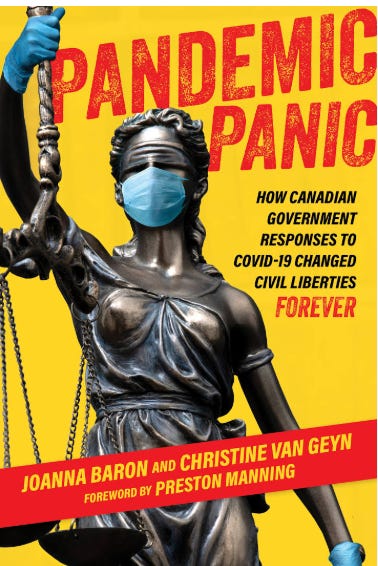
On the basis of Lt. Col. David Redman’s statements, an influenza emergency protocol could have been adapted for rapid initiation. This would have resulted in focused protection of the vulnerable elderly with co-morbidities, and near normal conditions for the rest of us. This would have obviated the immense social and economic disruption of Albertans’ lives.
On P19, the report says that as of “March 17, 2020, Jason Kenney, the Premier of Alberta and Provincial Cabinet declared a public health state of emergency pursuant to s. 52.1 of the Public Health Act (“PHA”).” This had a number of implications. But it didn’t have to carry on; the state of emergency could have been lifted later in 2020 when it became clear that C19 wasn’t the disaster that the CBC and other major news media drummed out. While the elderly with co-morbidities were at higher risk, most others were at low risk.
Chapter 1: Governance and Flow of Information. What’s missing from this chapter is a critique of the “Trusted News Initiative”. This consortium of big tech and news operations was established with the stated goal of combatting erroneous information that was being distributed to the public via the increasingly available internet. In March 2020, the CBC reported that the TNI would “tackle harmful coronavirus disinformation” and that the TNI partners would “alert each other to disinformation about coronavirus, including ‘imposter content’ purporting to come from trusted sources. Such content will be reviewed promptly to ensure that disinformation is not republished.” To the TNI harmful disinformation included: SARS CoV-2 originated in a Wuhan lab; there are effective treatments for C19; rational debate with health professionals holding different opinions should be welcome; mRNA vaccines may cause serious adverse effects; natural immunity is effective against C19. Critically, TNI decided what constituted misinformation/disinformation. This policy toward C19 resulted in no reports of effective treatment for C19, substantially delayed reporting on the “lab leak” hypothesis of the origin of C19, no public discussions regarding alternatives to lockdowns, mask wearing or social distancing, no coverage of medical experts who offered alternative opinions, delayed and grudgingly late reporting on vaccine adverse effects and almost no mention of natural immunity or vaccine contracts.

Chapter 2: Regulatory Bodies. This is an area of major concern for many citizens for at least two reasons- too much power and too little expertise.
Too much power. The professional colleges have too much power in that they are the police, prosecution, judge and jury- an all-in-one hammer. They can charge a member with an offence against patients and/or the profession, and then they have complete access to records/evidence. Following this they may charge a member with an offence and then they judge the member’s innocence or guilt followed by imposition of a punishment. Compare this to a non-professional case of theft. Herein the person may be charged by the police who gather evidence in a controlled and regulated manner. The evidence is taken by a prosecutor for presentation to a judge/jury.
The professional colleges should have only the ability to receive complaints of non-professional conduct of its members. Then subsequent investigation and judgement should be conducted by separate bodies at arm’s length. May I suggest that all professional colleges submit their investigations and judgements to a new independent body that is constituted to cover all professional colleges in Alberta.

Chapter 9 Therapeutics and Too little expertise. Professionals have a duty to their patients as exemplified by a guiding statement for physicians which states- “The physician owes a duty of loyalty to protect and further the patient’s best interests and goals of care by using the physician’s expertise, knowledge, and prudent clinical judgment.” The sentiment applies to all health professions. It is the individual professional who knows patients’ requirements best- not the regulatory college. As such the colleges must not have the power to tell professionals how to practice their crafts. I noted that Chapter 9 addressed a great many concerns in the way that potential therapeutics for C19 were handled by the professional colleges and Alberta Health.
.
I would also like to bring the Task Force’s attention to two letters that were to sent during C19 to the Alberta professional colleges that regulate physicians, surgeons, nurses and pharmacists. These letters provided detailed well-referenced information about potential C19 therapies, such as ivermectin. They can be found here and here.
Clearly, the Alberta colleges displayed regulatory over-reach in forbidding the use of specific generic drugs when the scientific/medical evidence showed that they were more effective and less toxic than some patent-protected treatments that were approved.
Going forward. The Task Force report quotes CPSA on P90 “Physicians are not permitted to prescribe ivermectin as a preventive measure against COVID-19. Health Canada has not approved ivermectin for use in preventing or treating COVID-19, and CPSA supports this position.” When I contacted HC during C19, they stated that doctors could prescribe any HC approved product in an off-label manner provided the doctor was acting on evidence and in the best interests of patients. Thus, while HC had not approved ivermectin for C19, HC did not forbid its use. CPSA extended lack of explicit approval to banning prescription of ivermectin but they don’t ban hundreds of other drugs that haven’t met the HC imprimatur.
There is a solution in Right-To-Try. In the future there will be circumstances similar to those of C19- a novel pathogen and potential yet unproven drug therapies. This could be addressed by implementing a Right-To-Try rule for patients (and their doctors). The idea is to give patients the power to decide if they want to try any given therapy as long as they provide a statement of informed consent. If this is combined with citizen science, Alberta could create a powerful therapeutic tool. The citizen science component would entail a project in which patients contribute information regarding their diagnosis, treatment and outcome to a database. Each confidence-protected record then would be an anecdotal clinical report. When many such records are collected, this becomes data. This would be the basis of an observational clinical trial. Granted it would not be double-blind or placebo-controlled but it would be a good step toward fulfilling the criteria as elaborated by Dr. Austin Bradford Hill (the Hill criteria). For further details see here.
Vitamin D. A positive outcome of C19 has been the greater recognition of the importance of vitamin D for overall health and specifically for immune optimization. But this information alone was not sufficient for optimal exploitation during C19. Vitamin D takes days to be activated after absorption into the human body. Thus, it must undergo two hydroxylation reactions; firstly, to calcifediol/25-OH vitamin D and then calcitriol/1,25-diOH vitamin D. Doctors in Cordoba, Spain used this information in their successful care of vulnerable patients. They used calcifediol to successfully treat long-term care home residents who tested positive for C19. The treated cohort of 50 had only one admitted to ICU with no deaths compared with the untreated cohort of 26 in which 13 were admitted to ICU and 2 died.
Not only was calcifediol able to treat this viral infection, but adequate blood levels of vitamin D protected people from active infections. Just making Canadians vitamin D sufficient could save >$23Billion annually. Public Health should be leading the charge.
Leading Canada. Alberta has set an example for the rest of Canada. The Alberta Task Force has reached many of the same conclusions as the citizen funded and operated National Citizens Inquiry, whose report is found here. Will the feds and other jurisdictions put on a halter and be led to drink of water?
The alberta government response was pure malfeasance.
If there was any actual panic or fear of mass casualties the government would have advertised Vitamin D, Zinc and Vitamin C for almost a year prior to the Human mRNA Experiment .
https://danielnagase.substack.com/p/logical-suprise